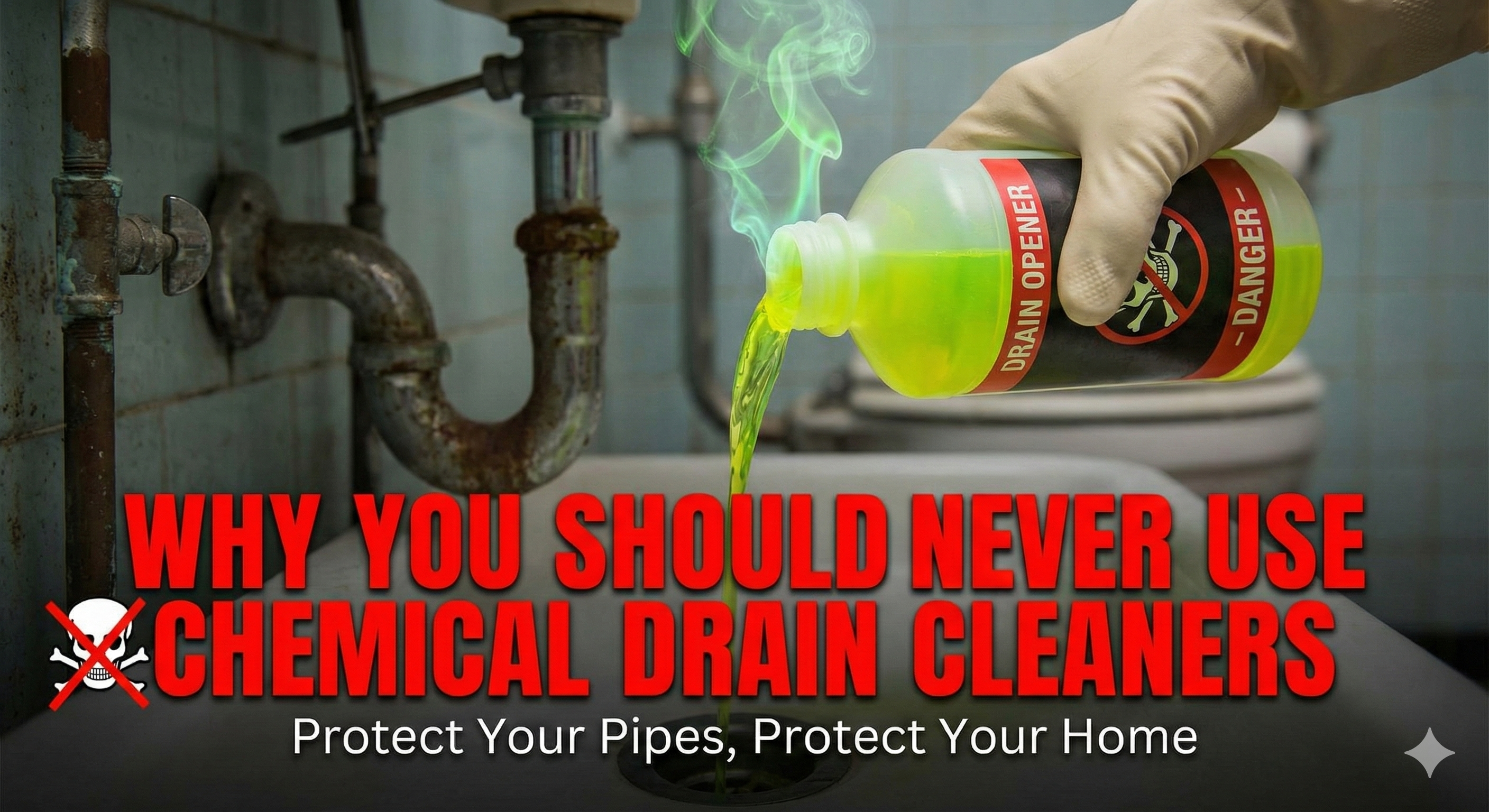
When a drain backs up, it’s tempting to reach for a bottle of chemical drain cleaner. Those bright orange and blue labels promise a quick fix—“dissolves clogs in minutes!” they claim. But the reality is far more damaging. Chemical drain cleaners don’t just clear your pipes; they can permanently damage them, creating expensive problems down the line. If you’re dealing with slow drains in your Berks County home, here’s what you need to know and what actually works instead.
The Science of Damage: How Chemical Cleaners Harm Your Pipes
Chemical drain cleaners work by generating extreme heat—sometimes exceeding 200°F—to dissolve grease and organic matter clogging your pipes. Sounds effective, right? The problem is what that heat does to the pipes themselves.
If your home was built before the 1980s, there’s a good chance your drain lines are made of cast iron. This material, common in older Reading and Wyomissing homes, is vulnerable to chemical corrosion. The caustic compounds in drain cleaners eat through the cast iron’s protective layer, causing rust and eventually creating pinhole leaks. These leaks often develop behind walls or under floors, where they can rot wood framing and encourage black mold growth long before you notice a problem.
Even newer homes with PVC pipes aren’t safe. PVC melts at around 140°F, and chemical cleaners can easily exceed that temperature. The heat warps and weakens the pipe material, leading to cracks and leaks that compromise your entire drainage system.
To make matters worse, chemical cleaners often create fumes that can burn your eyes, skin, and lungs—especially dangerous if you have children or pets at home.
The “Band-Aid” Effect: Why Clogs Keep Coming Back
Here’s the dirty truth about chemical drain cleaners that manufacturers don’t advertise: they rarely solve the underlying problem.
Chemical cleaners work by burning a small hole through sludge buildup. They might dissolve enough to temporarily restore flow, but they don’t address the real clog—they just poke a tiny pathway through it. Within a few weeks, debris, hair, and grease accumulate again, and you’re right back where you started.
This creates a vicious cycle: the problem returns, you use more chemicals (further damaging the pipes), and the cost of a temporary fix compounds over time. Many homeowners end up spending $50–100 annually on chemical cleaners, only to face a major pipe repair bill years later.
DIY Alternatives That Actually Work
Before reaching for chemicals, try these proven methods:
1. The Plunger
The humble plunger is still one of the most effective tools for clearing minor clogs. Fill the sink or tub with a few inches of water to create a seal, position the plunger over the drain, and pump vigorously for 15–20 seconds. For stubborn clogs, repeat 3–4 times. This creates pressure that dislodges debris without damaging pipes.
2. The Plumbing Snake
A simple hand-crank plumbing snake costs $15–30 and works surprisingly well. Insert the snake into the drain and turn the handle to twist through the clog. Feed it deeper as you encounter resistance. Pull out the snake slowly; it should bring hair, soap buildup, and other debris with it. This method is safe for all pipe types and actually removes the obstruction rather than just poking a hole through it.
3. Baking Soda & Vinegar
This old-fashioned method is safe and gentler than chemicals. Pour half a cup of baking soda down the drain, followed by a cup of white vinegar. Cover the drain with a plug and wait 30 minutes. The fizzing reaction helps break up grease buildup. Flush with hot water. It won’t clear severe clogs, but it’s excellent for maintenance and prevention.
The Professional Solution: Hydro-Jetting
When DIY methods fail or you’re dealing with a stubborn clog, professional drain cleaning using hydro-jetting is the gold standard.
Hydro-jetting uses pressurized water—up to 4,000 PSI—to scour the interior walls of your pipes completely clean. Unlike chemicals, hydro-jetting doesn’t burn holes; it physically removes all accumulation: grease, mineral deposits, hair, and tree roots (in sewer lines). The pipes emerge genuinely clean, not just temporarily open.
Hydro-jetting is safe for all pipe materials and actually extends the life of your plumbing by removing years of buildup. For homes in Berks County with aging cast iron or PVC systems, it’s often the most cost-effective long-term solution.
What If a Chemical Cleaner Already Damaged Your Pipes?
If you’ve used chemical drain cleaners and now notice leaks, musty odors, or slow drainage, don’t wait. Damage compounds over time, and what starts as a pinhole leak can become a major failure.
Signs your pipes are damaged include:
- Water spots on ceilings or walls
- Musty, moldy odors in bathrooms or basements
- Slow drains across multiple fixtures (not just one)
- Unusually high water bills
If you suspect chemical damage has caused a sudden leak, you’re looking at an emergency plumbing situation that requires immediate professional attention to prevent water damage and mold.
The Bottom Line
Chemical drain cleaners promise speed but deliver damage, expense, and false solutions. Your pipes are an investment in your home’s comfort and safety. Protect them by using proven alternatives: plungers, snakes, or professional hydro-jetting.
When in doubt, call a licensed plumber. The small cost of professional service today saves thousands in pipe replacement and water damage repairs tomorrow. At Rescue One Plumbing, we’re here to keep your Berks County home’s drains flowing freely—the safe, lasting way.